Showing posts with label 1992. Show all posts

Wednesday, 5 October 2011

Batman Returns (1992)

THE BAT, THE CAT, THE PENGUIN

Next on the list for Batman Week is the appropriately titled sequel Batman Returns, in which Batman… returns.  Following the massive success of the first outing (despite some critical backlash, it took just over $400 million from a $35 million budget), Warner Bros. were understandably eager to capitalise on the public’s desire for further adventures of the Batman. Though neither one had signed on in advance, and were even hesitant to agree to a second film, both Tim Burton and Michael Keaton returned to Gotham for the sequel, bringing along two or three new stars for the ride.

It’s Christmas in Gotham City, but the streets are still plagued with crime, so there is still a need for Batman (Michael Keaton). A new threat comes to the city in the form of the Penguin (Danny DeVito), a deformed psychotic intent on being accepted into Gotham society, aided by crooked businessman Max Shreck (Christopher Walken), whom he coerces into helping him, which includes demonising the Caped Crusader. However, plans are complicated by the appearance of Catwoman (Michelle Pfeiffer), a mysterious figure with a serious grudge against Shreck.

When it came time to make Batman Returns, the initial steps were taken almost instantaneously. Right away the original screenwriter, Sam Hamm, was brought back to draft a follow-up script, which was apparently set to be a direct sequel, picking up where the characters and events of the last film left off, before the decision was made to realise not one new villain, but two – Penguin and Catwoman. Warner Bros. also asked for Tim Burton and Michael Keaton to come back. Burton was hesitant, saying that he would only come back if there was the chance to do something interesting with it; Keaton said that he would come back, but with a better paycheque (clearly still a little irked at the huge amount Nicholson made from the first film) and more to do. Agreeing to all such terms, Warner Bros. coaxed the two back, even demoting the first film’s producers, Jon Peters and Peter Guber, to executive producer status in order to give Burton more creative control over proceedings. Upon his return, and in a move very similar to the first film, Burton’s first act was to reject the initial script from Hamm (in which the Penguin and Catwoman went after hidden treasure), opting to bring in another writer to come up with a new direction. As such, Burton brought in Heathers scribe Daniel Waters (we’ll overlook his writing credit immediately before Batman ReturnsHudson Hawk), who decided to take a different approach.

The script for Batman Returns is actually really good. Whereas the first Batman had the villain try to take over the city, but spend most of his time being annoyed that Batman got the press coverage and the hot blonde, the villains here are driven by something different altogether. Max Schreck is a more classic real world-type bad guy, who holds himself in the public image as benevolent, charitable, a wealthy man with the common touch. However, he is a corrupt and amoral businessman with an insatiable desire for power, in this case quite literally as he plans to build a new and completely unnecessary power plant in Gotham that will drain more energy than it gives. He’s greedy, unscrupulous and, if pushed, murderous.

In the corner of more fantastical villainy, there’s Penguin. Drawn here, Penguin is a thoroughly tragic character, born to wealthy parents, but callously abandoned at Christmas because his hideous form and vicious nature are just too much for them to take. Literally thrown from a bridge whilst still in his basket, the river carries him to the sewers, where he spends most of his life as an urban legend to Gothamites, with a brief stint as a sideshow freak in a travelling circus. Looking to return to the city as a kind of long lost son, he manufactures a rescue of the mayor’s child and, adopting a humble public persona, becomes the new “Golden Boy of Gotham”. All the while, his bitter resentment and ferocious anger see him plotting against the citizens, blackmailing Shreck into helping him re-enter society, and culminating in a plan of such homicidal depravity that even his own henchmen start to question it, resulting in a swift gunshot to the gut. What’s great is that Shreck thinks he can benefit from this, believing he can control the Penguin, pushing him for mayoral election and thereby getting his power plant approved.

The one that no one really figured on was Catwoman, who effectively forces her way into the melee for her own reasons. Selina Kyle begins as the meek secretary (sorry, Executive Assistant) to the callous Shreck, but when she pokes around too much, he pitches her through an office window and into the alley below. Whether she survived or actually died isn’t terribly clear (the debate rages on today), she is revived by cats and comes around very traumatised and supremely pissed off. From here on, she assumes the alter-ego of Catwoman and sets herself on destroying Max Shreck. This puts her in the firing line of Batman and the romantic sights of Penguin; but this equally puts them in her line of fire.

Bruce Wayne/Batman himself is put under some stresses as he attempts to stop Shreck’s crooked deal in business, investigate the origins and motives of the Penguin, put an end to Catwoman’s destructive spree, and engage in a romantic relationship with Selina Kyle. It all becomes more complicated when he is framed for a woman’s murder, turning the city against him.

Yes, there is actually a lot going on in this movie. Characters and motivations are played against one another really nicely. Allegiances are made carefully and enemies are made recklessly, with the regular thematic concern of false personas, split identity and the masks worn for nefarious purposes or self-preservation. There’s also the concern of where the line is between hero and villain. In the beginning, the people of Gotham love and trust Shreck, are hesitantly thankful for Batman, are unsure of the existence of Penguin, and have no idea who Catwoman is. Over the course of the film, Shreck’s credibility will be built and diminished, Batman will be demonised, Penguin will be exalted and cast away, and Catwoman always rests in the zone between hero and villain (her first public act is to save a woman from a mugger, only to then attack the woman herself). All the while, for all of the immorality of their actions, the sheer horror of their plans, we are always given a chance to understand why they do what they do. The Joker was someone who liked to create chaos and terror because he enjoyed it; the villains here have much more relatable concerns, even if they appal us.

Tim Burton, having been given a bigger budget and more freedom to work, has gone wild with grim Expressionist flair. Shreck is a direct nod to two different villains of German Expressionism, with his name coming from the actor who first portrayed Nosferatu, and his look coming from the titular character from The Cabinet of Dr. Caligari. And though the city no longer exists in the filthy shadows of the first film, it has been replaced with a look that’s brighter, but no less dark for its eerie implication and starkness. I said in the Batman review that he had, in Gotham City, created one of the truly great cityscapes of cinema. The city of Batman Returns is equally impressive, with a thick layer of snow peppering the air and covering the dirt. It’s almost like the city itself has adopted a seasonal mask of snow in the hopes that the citizens will forget the unsettling truth beneath the surface.

He’s also crafted some genuinely affecting moments between these characters. The realisation between Bruce Wayne and Selina Kyle of their respective identities as they dance is nicely underplayed, and the final scene with Penguin is, despite him being a monster, achingly sad. And his cast do a great job in capturing these moments. Keaton seems more comfortable in his dual role here, still able to be badass, but human as well. Michelle Pfeiffer is absolutely superb as Selina Kyle/Catwoman, beginning so meek and awkward before tearing through with a confidence and swagger that is seductive as all hell, and without screaming as regularly or as pointlessly as the last film’s heroine. Christopher Walken is an unsettling presence as always, mainly because whenever you look at him, no matter what he says, you know something isn’t right with him, that’s he’s not to be trusted. And Danny DeVito is… okay, before I make my point, I’ll just say this. For his performance in this film, Danny DeVito was nominated for a Golden Razzie, the anti-Oscar, as Worst Supporting Actor. Personally, I think that’s a damn travesty, because he’s brilliant as the Penguin. His physicality, his emotionality, his voice, that vicious streak, that angry stare, there’s not a moment when he’s not convincing… that’s not anti-Oscar material, that’s Oscar material. Damn Razzies.

Danny Elfman even ups his game with the score to Batman Returns, from his already excellent work on the first film. There’s still the dark drive and swell of the music that we had become familiar with, but it’s all become so much grander, with things ranging from the hugely operatic to the quiet delicacy of a trinket box or, more appropriately, a musical snow globe. It is a fine soundtrack that rests underneath all of this.

Honestly, I think Batman Returns is better than Batman. The script is stronger, the pace is improved, the action is handled better (although action scenes were never really Burton’s forte), there’s some actual attempts at depth and subtext in the story and characters, and, although I still really like the dark and grimy look of the first film, I much prefer the look of this film, which has a eerily beautiful, almost elegiac tone. It’s more involving, more eerie, more horrific, more tragic… yes, I prefer the second to the first in almost every way. In fact, this is one of two films that are the contenders for my favourite Tim Burton film ever. Oh, yes.

Thursday, 22 September 2011

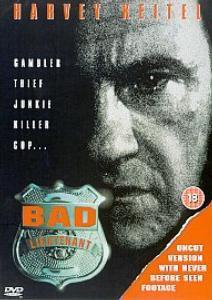
Bad Lieutenant (1992)

GAMBLER. THIEF. JUNKIE. KILLER. COP...

For many an artist with some sort of religious influence in their lives, at some point they will consider the topic of redemption. Rather more specifically, how far does one go before they are beyond redemption? Is that even possible? Can someone be bad for so long, but still be offered a saving grace? Does the possibility of redemption depend wholly on the amount of torment that person suffers as a result of their sins? These would be the questions that act as the central concern for Abel Ferrara’s 1992 film Bad Lieutenant, where a police officer is tormented by his own demons, but seems incapable of rectifying his mistakes.

A police Lieutenant (Harvey Keitel) goes about his day in a less than typical fashion. He has little interest in stopping or investigating crimes, but instead is more concerned with pursuing his own vices, like drugs, hookers, gambling and generally abusing his position of power. He is in serious debt, accumulated through ill bets on baseball, continuously doubling-up to recoup his losses. When a nun (Frankie Thorn) is raped in a church, the attempts to investigate the crime force the Lieutenant to reconsider his life and the choices he’s made.

Abel Ferrara is a not a subtle man, and he prides himself as someone who makes uncompromising films beyond the edge of what many believe to be proper. Released in 1976, his first feature was a porno called 9 Lives of a Wet Pussy, starring his then-girlfriend, some of her friends and about a half dozen men, which included himself, albeit reluctantly. His next film got him instant attention, particularly in the UK. His 1979 horror flick The Driller Killer wound up on the infamous ‘video nasty’ list, with the conservative populace decrying it for its amoral and corruptive influence. However, the idea of Ferrara’s work being amoral is somewhat misleading. Whilst it is true that he has a predilection for characters who are self-destructive and corrupted, and that his stories take place in a harsh, bleak world, there is still a moralistic influence that runs through his work. In fact, it’s partly because of this sense of morality that this is what cripples the characters.

Ferrara was raised a Catholic, and brought up on the streets of New York, and both of these factors figure heavily into his work. Religion is a regular thematic influence and many of his films take place on the harsh and gritty streets of his home city. In Bad Lieutenant, the film that will probably be forever regarded as Ferrara’s best, these two influences are exploited to their fullest potential. The film charts the gradual downfall of a character that has long ago receded into his own desiccated moral self, cursing his soul with every act of violence and depravity. The character is also an officer of the law, a role that is meant to reflect goodness and honour, which just makes his descent all the greater. He is never even named, credited only as The Lieutenant, marking him not as a specific individual, but as a representative of a more general corruptive authority, which is another fairly regular Ferrara preoccupation.

There is little goodness to find in this character. No goodness at all, really. Within the first twenty minutes, we see him act in ways that you’d be hard pressed to like. He yells and curses at his kids, takes bets at the scene of a double homicide that he’s supposed to be investigating, does a lot of drugs, ignores the actions of a car thief as they happen right in front of him, and engages the services of two hookers that he barely seems to notice. And this is at the highpoint of his day. Over the course of the film, he does even more drugs, loses tens of thousands of dollars on bad bets, interrupts a convenience store robbery so he can take the money himself, shoots out his own car stereo because of the baseball score, and tries to steal drugs from the scene of a crime. His most unsettling actions come from when he pulls over two young girls for a busted taillight. Neither of the girls have a licence to drive, so the Lieutenant makes them a deal: one of them strips a little bit to show her ass, and the other simulates giving a blowjob, all whilst he masturbates in front of them. And this is all in the middle of the street, albeit at night. It’s a very uncomfortable scene, made worse by the long drawn out nature of the editing. It’s also indicative as to how he operates. He steps into the situation under the guise of authority, but quickly turns this position to abusive advantage. At no point do we ever see him do anything that you could regard as good. It’s very important that we not like this man.

It’s important because we must believe him to be beyond saving, out of reach of a redemptive hand. Indeed, this is how he sees himself. Although he will identify himself as a Catholic, he must believe himself to be beyond help or hope. It’s the only way he can continue to do what he does, be what he is. However, when he hears of the brutal rape of a nun, this kicks in something of a religious crisis in him. It’s not because of the act itself. In fact, when he first hears about it, his initial reaction is to call the church a scam and say that if the victim weren’t a nun, no one would really care. What completely throws him is the reaction of the nun to her ordeal. Believing this to be an opportunity to show the divine grace of God to those that violated her, she forgives them and refuses to identify them. That their victim forgives these two rapists so quickly and without hesitation causes the Lieutenant a great deal of pain. Until now, he believed everyone to be corrupt, so he had no real need to worry about his fate. However, the nun’s actions show that there can be redemption for anyone – maybe even him. In the end, what causes the Lieutenant’s moral crisis isn’t really the toll of his wicked ways; it’s hope that breaks him. As some sort of last-ditch attempt at rebalancing his world, he goes to the nun, who he finds in the middle of prayer. Completely out of his mind on booze and drugs, he tells her that, if she tells him the identity of her attackers, he will deliver her true justice (i.e. kill them). When she refuses, he tries everything he can to get her to change her mind, pleading to her need for revenge, asking her to protect future victims, questioning her right to forgive these people for their crimes. That she steadfastly refuses to accept his offer causes him to have a complete and utter break with reality, hallucinating that Jesus now stands silently before him. There’s a line in John Milton’s Paradise Lost that goes, “abashed the Devil stood and felt how awful goodness is.” This is the root of the Lieutenant’s anguish. He now has to face the fact that for all of his power, his authority, his muscle, he is the weakest person in the film, and the thing that took him down was an act of inconceivable kindness to someone as morally repugnant as him.

Harvey Keitel’s performance in Bad Lieutenant may be one of the bravest in cinema, and perhaps the best of his career. He engages fully with hideous nature of the Lieutenant, tackling it all without fear or hesitance or judgement. He’s a violent man, a hypocrite and an utterly reprehensible human being… and Keitel holds nothing back from his performance. It’s not just in the harsh nature of the character that Keitel excels, but in the searing anguish that sits at his centre. When he finally breaks down in the church, crying and yelling at the image of Jesus in front of him, his pained sobs show just how lost and devastated he is. Keitel is on absolute fire in this film, and should probably receive way more credit than he actually does for his work here.

As to the concerns about religion and morality, that’s something worthy of a bit more discussion. It would seem that Bad Lieutenant proposes the idea that Catholicism is the saviour. Although the nun is not protected by her status or position in society, it’s her calling that allows her to deal with her trauma. Indeed, she is the one with most justification to be angry, but she chooses to follow her faith to help her cope. The nun is really the only character in the film that isn’t a hypocrite. Whilst that is rather commendable to a degree, it does start to get a little uneasy in other areas.

The rapists, having been forgiven for their crimes, receive no punishment. In fact, what they receive is protection. With their victim having forgiven them and prayed for them, they do indeed seem to find protection and help. The Lieutenant, being the bad soul that he is, finds his situation becoming darker and more insurmountable as he goes on without asking forgiveness from those he wronged. Therefore, his fate is sealed. There’s also a sense in the film that there exists two laws: those of Man and those of God. The former laws are shown to be hollow, weak, being enforced by the whims of the flawed people that wear the badge; the latter laws are stronger, have more resonance, are represented by individuals of character and grace. From this perspective, it seems to espouse an idea that can be found in some of the very devout – that by following the laws of God, you don’t need to fear the laws, or actions, of Man. This has never been an idea to sit too well with me, since religious rules are as open to interpretation as the rest of them. Plus, it’s this kind of thinking that can lead people to kill doctors who work in women’s clinics because they believe it’s their moral responsibility to protect the unborn. As such, I really can’t take to the ideas presented in this film.

Bad Lieutenant is a raw, gritty, powerful and unsettling film, with an absolutely superb performance from Harvey Keitel at its core. Those looking for a good story may be somewhat disappointed, since the film more follows the apparently disjointed actions of a severely unhinged character rather than an actual narrative. However, the character is thoroughly intriguing in the most hideous terms. The heavy-handed use of religious iconography in the film can lead to some uncomfortable conclusions, but it does at least present an opportunity to engage with these ideas. It’s not for everyone, but it is something that should perhaps be experienced once, if for no other reason than to appreciate the great skill of the central performer.

Tuesday, 30 August 2011

Article 99 (1992)


WHEN YOUR HOSPITAL IS A WAR ZONE, YOU HAVE TO FIGHT TO SAVE LIVES.

Healthcare has long been a touchy subject for most people, but particularly in America. So many people get lost in the miasma of bureaucracy from the insurance companies and hospitals and government health initiatives, it’s hard to find much light in a system that, from certain angles, seems to place more emphasis on cost-reduction than life-saving. One of the many groups that get caught up in all of this is the veterans of America, who were promised lifelong medical care for their sacrifices, but are met with a wall of red tape when they try to claim. In 1992, a film was released that sought address the indignities suffered by those who once fought for their country, but now have to fight against it in order to get health cover.

In a severely underfunded veterans’ hospital, a group of doctors, led by Dr. Sturgess (Ray Liotta), must try to treat too many patients with too little supplies. The main cause of their problems is the bureaucratic belt-tightening by the hospital callous chief administrators. Determined to do their jobs as best they can, with the help of some patients and nurses, they defy the orders of management, stealing supplies and performing unauthorized operations.

As far as Article 99 is concerned, veterans are the ones who, in terms of medical care, get hit hardest. Despite the soldiers being promised free care at army hospitals, there is a system in place that seeks to stop this from happening as much as possible. The title refers to a clause that, although the patient may indeed need medical care, the veterans’ hospitals and the government cannot provide such care since it cannot be proved that the problem was a result of injuries sustained from war. This in itself is enough to angry up the blood of most people. It essentially presupposes that the only health concerns a soldier would ever have, mental or physical, would be those directly attributable to their wartime efforts. It neglects such things as later life heart disease, which is the very complaint our first character has. A decorated veteran, he needs a triple bypass and so heads to the VA to get the paperwork approved so he can get himself fixed up. Unfortunately, he’s met with such an all-consuming bureaucratic nightmare that it has men lined up all over the place to fill in one form to get some more forms to be filled out and taken to the next line to fill in the form to get… good lord, I need a seat. Our man is taken aside by Luther, played by Keith David, the man who knows how rotten the system is and explains the pitfalls to the poor guy, and us. Luther tells him, “the only thing that’s gonna get bypassed is you.” Not two minutes later, another former soldier, diagnosed with Post-Traumatic Stress Disorder, having just received an Article 99 letter, pitches his truck through the lobby of the hospital and goes on a rampage through the building with an automatic rifle. With the underpaid security dealing with problems elsewhere, it’s up to the doctors to take him down with a defibrillator.

If they’re lucky enough to actually get into the hospital, they’ll spend their time being “turfed” from one department to the other until the paperwork can be sufficiently fudged that they can get the help they need. Until then, they populate the wards, the corridors, the basement, the laundry room, all fragile men with their dignity long since stripped away by their fight to get some help.

So like I said, the filmmakers have picked themselves a highly emotive and complex subject. Writer Ron Cutler and director Howard Deutch clearly feel like they have something to say about the way things seem to be. Indeed, who wouldn’t? They have also assembled themselves a superb cast, featuring Ray Liotta, Kiefer Sutherland, Forest Whitaker, Lea Thompson, John Mahoney, Eli Wallach, Kathy Baker, Keith David, John C. McGinley. Sutherland himself apparently felt especially passionate about this project, since his maternal grandfather was Tommy Douglas, the guy who started Canada’s own healthcare system, leading him to be voted as the greatest Canadian ever.

Deutch has found the occasional image that lends itself quite nicely to the project. For example, there is a nice bookending image of the inscription on the steps of the VA hospital. When we first see it, it’s upside down; at film’s end, it’s the right way up. Given the focus on those in the military, this would be a clear reflection of the idea that when flying a flag, to fly it upside down is a sign of distress or something wrong. It’s a perfectly elegant way of suggesting the system is broken before even entering the building.

However, the main problem with the film is that, frankly, it treats the subject a little too… light-hearted? I don’t mean to suggest that it makes it seem like it’s all fun and games, but there is an undeniable feeling that some of the people involved are having fun here. Honestly, you know what Article 99 reminds me of? Scrubs. And not just because John C. McGinley’s there, and that his performance as Dr. Cox in Scrubs was likely more than a little influenced by Ray Liotta in this film. It feels a little like a sitcom because there’s no real sense of scale to the problem. It’s not really about healthcare in America, just in this particular hospital. The filmmakers seem to have confused the dramatic conflict of the film’s character with that of the higher subject matter. Perhaps they were afraid to be too much of a downer, so they bumped up the joke count slightly to combat the woes of medical misappropriation. There is something of a tonal schism in Article 99, similar to the kind of episodic trajectory that occurred in …And Justice for All. It wants you to acknowledge that there is something wrong, that the system is broken, but fails to offer up any kind of hope outside of the over-dramatic escapades that only happen in the movies or on TV. Overall, it makes things feel false… disingenuous… wrong. If they had given the film an extra half hour in which to develop characters more, or had a more widespread consideration of the problem, they would have done better. However, the simple fact is that they just weren’t up to the task at hand. This subject matter deserves a more balanced and comprehensive approach to work as a dramatic piece, but it’s all too neatly tied up here. If this really is such a massive problem, it would take a lot more than a relatively brief protest to solve.

Article 99 clearly has an agenda of sorts, but it’s doubtful as to whether or not it actually succeeds in addressing it properly, so it’s difficult to consider it as anything other than a failure. Even removing its aspirations of social change, and despite a couple of decent performances and the occasional nice piece of direction, it simply doesn’t hit any higher than an average episode of TV drama or sitcom. And its ending is something of a mixed message, too.

Wednesday, 13 July 2011

Alien³ (1992)

IN 1979, WE DISCOVERED IN SPACE NO ONE CAN HEAR YOU SCREAM. IN 1992, WE WILL DISCOVER, ON EARTH, EVERYONE CAN HEAR YOU SCREAM.

There is, in music, the notion of the difficult third album, which largely hinges on the response to the previous two. The first album shows people what you can do. If that’s a success, the second one shows whether or not it was a fluke. If that’s a success, the third should solidify the classic status of the band. Here, the band isn’t a band; it’s a Xenomorph. Following two very different, but very successful Alien movies, as is the way, the third film in the series had so much more riding on it… but where do you go with it? The Alien franchise seemed to be the one where people could take risks, could make something bold and new, could explore avenues unavailable elsewhere. In 1992, under the direction of then newcomer David Fincher, the new instalment of the incredibly successful series landed as Alien³.

After escaping from the alien planet, the ship carrying Ripley (Sigourney Weaver) and the others crashes into a prison-turned-ore refinery. While recovering and awaiting an air transport home, Ripley discovers her ship had an alien stowaway. As the creature grows and starts to kill the inhabitants, she has to fight the menace once again.

It’s actually a little difficult to conceive of the production nightmare that was Alien³. Between all of abandoned scripts, botched rewrites, directors coming and going, conflicting opinions and the lack of a good single central concept, it’s a wonder the film got made at all. The major driving force behind getting this film made were producers David Giler and Walter Hill. It was these two who wanted to ensure the third film was as conceptually strong as its predecessors. They threw around ideas, hired writers to work things over (including sf novelist William Gibson), looking to see where the spark would come from. Ideas ranged from giant mall space stations with a consumerist angle to a corporate spin involving a rival company to the series’ established Weyland-Yutani with a political edge, from genetically-enhanced Xenomorph species set in dusty little township in Downtown Outer Space to a sect of Luddite monks living on a small wooden planetoid with a heavy religious subtext. There was even one about a prison break on a prison station that didn’t feature Ripley at all. Ideas were not exactly in short supply, but none seemed to have the simplicity that marked the first two. Problem, though, was that they had already announced an official release date and production had already begun on the film, even though a script had not been written or even a direction agreed upon. Hell, just look at the tagline up there. That was produced before the film was completed and there was still some confusion as to whether or not the film was actually set on Earth. That's the extent of how troubled production was.

Frankly, one of Alien³’s major sufferings is that there are so many ideas and notions lying underneath the film, but none of them are adequately developed enough to make any sense. The whole script is a hash of all the ideas considered during the pre-production process. As such, the prison station is kept, with the prisoners merged with the Luddite monk idea and given a Third World labourers feel. The genetic enhancement stuff is dropped, but the idea of a new breed of alien is kept, having it burst forth from a dog, creating a more dog-like creature. There is also the feeling that we’re going over ground that we’ve already covered before. Ripley effectively returns to where she was at the beginning of Aliens, trying to be the one who warns people of the danger, only to be ignored or regarded as crazy. Weirdly, she spends some of the film, skirting the issue, not mentioning the potential alien threat, rather than the potential for a disease outbreak.

David Fincher, here taking his first crack at feature film after much success in commercials and pop promo videos, has pretty much disowned the film. In fact, he left the project so fast, the editing process had not yet even begun. There is a very real attempt from him to engage with the material in a visual way separate from the previous two films. It’s all low angles and slow zooms, covered with a brown grimy hue, and it's decent for the most part. There are other moments that are of lesser quality, specifically the Xenomorph’s perspective chase sequences, using a fish-eye lens and smudgey filter. This had been done to death already by numerous low-end Jaws rip-offs, so it does little in the way of being the fresh new way they were looking for. Fincher shouldn’t really be blamed, though, and he actually did a pretty good job of holding things together. He’s a great director with a superb sense of story and visuals, but he was fighting a losing battle from the get-go on this one.

A short note on the editing, because this is where the holes in the story have to be covered up. It’s here that you can most easily see the evidence of a lack of an overall vision for the film. The opening sequence has no real established pace or mood, the chasm between the events of the last film and this one awkwardly covered with some cheap computer readout nonsense. Those characters deserved a little better than this, but such is the awkward gear change between the last film and this one. Also, it fails to cover up all of the holes. For example, for all intents and purposes, Paul McGann’s character is still lying in a bed in a straightjacket. We don’t know if he was killed or not. There’s no mention of him after that moment. Not even a clumsy throwaway line. Nothing.

Acting overall is actually pretty decent, though you see the occasional mild strain of confusion in Weaver. In the same way that Fincher had to contend with constant last-minute changes, Weaver had to do all this on camera, where everyone could see. There are still moments where we can see the old Ripley in there, though. Tough, intelligent, a telling crack in the voice in a plea for help shows that this is the one who already knows what kind of cost fighting these things comes at. Also, credit to her for doing the Tough Chick Goes Bald here, five years before Demi Moore got so much press for doing the same in G.I. Jane. Other members of the cast get an easier time of it, since they don’t have to deal with anything outside of this instalment. Charles S. Dutton is really good as Dillon, the spiritual leader to the prisoners and apparently one of its most dangerous inmates. Charles Dance is also pretty good, recalling a sense of the understatement of the original film. Most everyone else is interchangeable, with some trying to overact their way out of the pack.

On its own merits, there doesn’t seem to be a whole lot going on underneath the whole, as a result of the underdevelopment of so many ideas, with the possible exception of some very late-in-the-game ‘Ripley as Christ’ metaphor of self-sacrifice. However, given our history with the series, on a subtextual level, things seem to rather clumsily return to the notion of rape and matricide, with the added element of abortion. With Ripley having been impregnated with a mother spawn (and having a gestation period way longer than any person before), she knows that she cannot survive the ordeal of birth, and so decides to kill it and herself. Such notions would make a bit more sense in light of the religious aspect of the film as carried by the prisoner populace. However, these ideas are simply not taken advantage of, instead leaving them as largely incomplete thoughts. James Cameron actually had a good seed of an idea that fits nicely into the evolution of the series, following the notion through an exploration of a new family dynamic as set by Ripley, Hicks and Newt. Constant rewrites from multiple writers eventually saw this eliminated. Shame.

Alien³ is, put simply, kind of a mess. There is an attempt made for a particular visual style, which makes things kind of suitably grimy. However, the story is confused, unsure as to what to do with itself and ends up largely treading on ground already covered by the series. Characters are fairly interchangeable, though they do give it a good crack. Whilst not as catastrophic as some may remember it, it is a major step down after the first two.

Friday, 24 June 2011

Accidental Hero (1992)

ONE SELFLESS ACT OF COURAGE CAN REALLY MESS UP YOUR WHOLE DAY

What makes a person? Specifically, what drives them to be self-centred shmucks as opposed to selfless do-gooders, or vice versa? Is it possible for someone to step outside of his or her own character and, more importantly, will anyone believe it if they did? Such is the central concern to Stephen Frears’ comedy-drama Accidental Hero. Part media satire and part morality play, the action surrounds three disparate individuals – a selfish conman, an almost jaded news reporter and a destitute war veteran – as they find themselves thrown together by circumstance and opportunity in the shape of a plane crash.

Bernie LaPlante (Dustin Hoffman) is a cynical hustler whose life is quickly falling in on itself. Whilst on his way to his son’s birthday, he witnesses a plane crash right in front of him. He begrudgingly goes on board to help, and rob, some people, including television reporter Gail Gayley (Geena Davis). It’s too dark to see who it is, so Gail starts a campaign to find the hero, offering one million dollars reward. In steps John Bubber (Andy Garcia), down-and-out nice guy, to claim the credit and reward. Media attention grows as Bubber’s conscience starts to creep in, and Bernie wants his money.

Right from the off, Frears tries to evoke a sense of the olden days, with the stirring music of Auld Lang Syne playing over the opening credits. Not the real olden days, though. The olden days as filtered through the haze of nostalgia and filmic memory. A time when many who saw Accidental Hero when it came out were young, when life was simpler, when there was no real complexity to moral questions and problems. There was right and there was wrong and you didn’t need any kind of moral compass to know which was which. God, if only it could all be this simple.

Things are then dragged into the here and now with a resolute introduction to two of our main characters and the world in which they live. Bernie LaPlante is in court, being defended by a young lawyer fresh from school, watching proceedings with a look of both bafflement and cynical resignation. Whilst the judge and lawyers work out the terms of his case, Bernie, noticing his lawyer’s unguarded purse, snatches it up, empties it of all cash. After they leave, he then gives the money back to his attorney as a repayment for a loan she gave him the week before… and then takes it right back again because, you know, he needs some gas money to go see his kid. His family life is, as you’d expect, not exactly glowing either. Long since split from the mother of his child, he’s a part time dad at best, and given some of the advice he dispenses to his son when they do get together, you get the feeling that maybe the boy would be better off without his father’s influence. In a single trip to a diner for lunch, he ditches the bill, keeps a wallet that his son found (and tried to return himself) and tells the youngster that he should try to avoid feeling bad for homeless people because most of them have plenty of money anyway and are just looking for more. In Bernie’s worldview, everyone’s like him… a hustler, a conman, someone just looking to take advantage. As far as Bernie’s concerned, being honest about dishonesty makes him the honest one… what a scumbag.

Our introduction to Gail Gayley isn’t exactly a shining one, either. We meet her as she interviews a man, a respectable man, with a nice suit, nice hair and something of warm smile on his face. When their interview concludes, he promptly turns round and jumps off the ledge he was standing on. Turns out that Gail was there, standing right on the ledge next to him, to get the final words of this man’s story before he leapt to his death. She is shocked that he actually does it, of course, but she’s clearly in conflict with herself about the situation. The second the poor sap lands, she says to her cameraman, “Did you get that?… Did I just say that?” She knows it’s her job to get the story at all costs, because there’s nothing worse than being scooped, but she is aware that this need to get the story is having an adverse effect on her personality. So, from the start, we’re shown that our protagonists (for now) are both at some stage of moral compromise.

Later that night, when Gail is flying back from a ceremony where she was given an award for her tireless pursuit of truth (where her acceptance speech is a rather frank dissemination on the nature of the media’s propensity to reduce individuals to stories than human beings), a disaster strikes. Gail’s plane crashes, trapping everyone on board. At just this moment, Bernie is driving along nearby, and sees the plane go down… but he doesn’t want to help out. Why would he? It’s wet out there and it’s dangerous and he’ll end up ruining his $100 shoes. Eventually he relents, swims through the muddy water the wreckage and opens up the emergency hatch. After a little boy begs him to save his dad, Bernie heads into the flaming fuselage to drag people out. When he stops to help the attractive redhead (Gail) from her seat, he can’t help but steal her purse and award, too. Well, he should get something for all his trouble. After all, he does end up losing a shoe in the process. When everyone’s safe, Bernie gets out of there because he’s late for his son’s birthday.

After the crash, the media are all over it, with everyone trying to find out who the mystery rescuer was. A massive campaign is started, headed by Gail, to find him. When they offer a $1,000,000 reward to the hero, every crazy person comes out of the woodwork, claiming to be him. Bernie can’t make it, though, because he gets arrested trying to sell Gail’s credit cards to some undercover cops. In court, he hears news that the mystery hero has come forward… John Bubber, an impoverished war veteran whose sincere eyes and humble words make him an instant hit. Bernie now has to get himself out of jail as soon as possible so he can get what’s coming to him. Sadly, he’s such a parasitic low-life to all that know him that his cries fall on deaf ears. Meanwhile, as the world, and Gail, become more enamoured with their new media sensation, John begins to feel the strain of being so loved for something he doesn’t deserve.

David Webb Peoples provides a wonderful script, with intriguing characters that oppose and parallel in equal measure. There’s a concern with legend or notoriety versus fact that Peoples used to near perfection in the same year’s Unforgiven. Bernie deserves the attention, but doesn’t want it; John doesn’t deserve the attention, but thinks he can handle it; and Gail knows that the attention is, for the most part, fleeting and all just a matter or perception, but it's her job to give that attention. It’s a fascinating dynamic, and pulled off very nicely. Peoples has also got a great sense of the dialogue for his players, giving Gail a media-savvy air to her words; lending John an eloquent, old-time corny manner of speaking honestly about life; and distilling Bernie’s cynicism into a few choice, occasionally profane, phrases… his simple rules of cutting through bullshit with even more bullshit. At some point during proceedings, when John wants to come clean and tell the world of Bernie’s heroism, Bernie tells him, “I don’t take credit, I’m a cash kinda guy.” Tell me you don’t get a sense of this man just from that one line.

Whilst it never just comes out and says it (which would be a bit much), Accidental Hero plays on the notion of morality, not just in the heavy maelstrom of a media blitzkrieg, but more when it actually counts. No one believes Bernie is capable of such selflessness, except for his son. John doesn’t think he could have done that, though everyone is positive it’s within him, including Bernie. Perhaps these guys are representative of the struggle within every person when faced with any kind of moral decision – John is who we want to be, with his humble nature and desire to do good and inspire good in others; Bernie is who we really are, with his more self-centred and cynical ways, wanting to be sure that he never gets taken advantage of. And within all this is the consideration that, when crisis comes knocking, we know we can depend on Bernie… we’re not 100% sure of John.

As previously noted, Stephen Frears does a nice job in bringing about the feel of an old screwball comedy from the 40s, as if Preston Sturges or Howard Hawks were in the director’s chair. Even the musical underscore echoes this kind of throwback, with it's play on songs by Gershwin and the patriotic stirrings of the Battle Hymn of the Republic. Within this, though, he doesn’t lose sight of the contemporary concerns of the film, like the satirical take on the modern media’s hysterical propensity to deify and manipulate, creating their own stories that can be mined as long as the star player holds out. It almost feels like Network if it were directed by Frank Capra.

There are maybe some points where this approach seems to contradict itself. Capra was a master at emotional manipulation, but for a good cause. With Accidental Hero, there are some times where you will watch the careful deification of a hero in an editing suite, the emotional manipulation to create an idol for a news story, only to have yourself be on the receiving end of a different form of emotional manipulation for the film. Fortunately, Frears is savvy enough a director to be aware of this. At a key climactic scene, he turns his camera away from the moment and points it at another camera, which just stares right back at you. Some moments are too personal to be shared with the world. Sometimes they’re just for those involved.

The cast handle themselves beautifully, too. Andy Garcia brings such a humble, ‘aw shucks’ quality to the role. A soft-spoken, wide-eyed charm that makes John Bubber, who could so easily have been too saccharine or preachy, feel like such a genuinely nice guy trying to do good. Geena Davis is equally charming, capably handling the role of a woman divided between being the battle-hardened journalist and the caring human being. Each has its draws and drawbacks, and Davis works it well (although her last conversation with her boss may be a bit too sob-filled for some). As it would be, it’s Dustin Hoffman who’s the standout. He’s always had that downtrodden sad-sack look about him, but tempered by a fierce emotionality that he can focus into a single look, which is ultimately what sells Bernie. For all his indignation and ranting and speeches about a terrible world, one look in his eyes and you can see that he’s not the soulless misanthrope he thinks he is. His biggest con is against himself. He’s just as vulnerable as anyone; only he’s got himself a much better shield.

There’s great support throughout, too. Joan Cusack is always a treat, particularly when you watch her react to other people in the scene. She’s a goldmine of comedic twitches and inflection. Chevy Chase, in keeping with the old-time feel of the piece, channels some of the great screwball comedy bosses, all sharp tones and staccato sentences, and Stephen Tobolowsky is a great partner for these moments. Kevin J. O’Connor is also a light joy as Gail’s cameraman, Chucky, a guy who can’t help but give a running commentary on the visual poetry he tries to create with every shot, convinced that each one is a prize-winner. Even James Madio does well as Bernie’s son, Joey.

Accidental Hero is a great, and surprisingly overlooked, little film. Performances are strong, the direction and script are great, and it’s a genuinely affecting piece of work. The message it holds may not be anything new, but it is a worthy one. Even if you don’t come away with the desire to give a helping hand to some poor bugger in the street, or be a better person to those around you, it’s still warm, funny and well worth the time you give it.